IncorpMe Console
An internal team console for IncorpMe that took them to page one on almost every relevant keyword in under 30 days: an AI SEO and content assistant, a keyword tracker and a content Kanban, publishing to the live marketing site by committing MDX through GitHub, with no shared database and no CMS.
- Page one in under 30 days
- Outcome
- IncorpMe.ai
- Client
- Internal Tools
- Service
The context
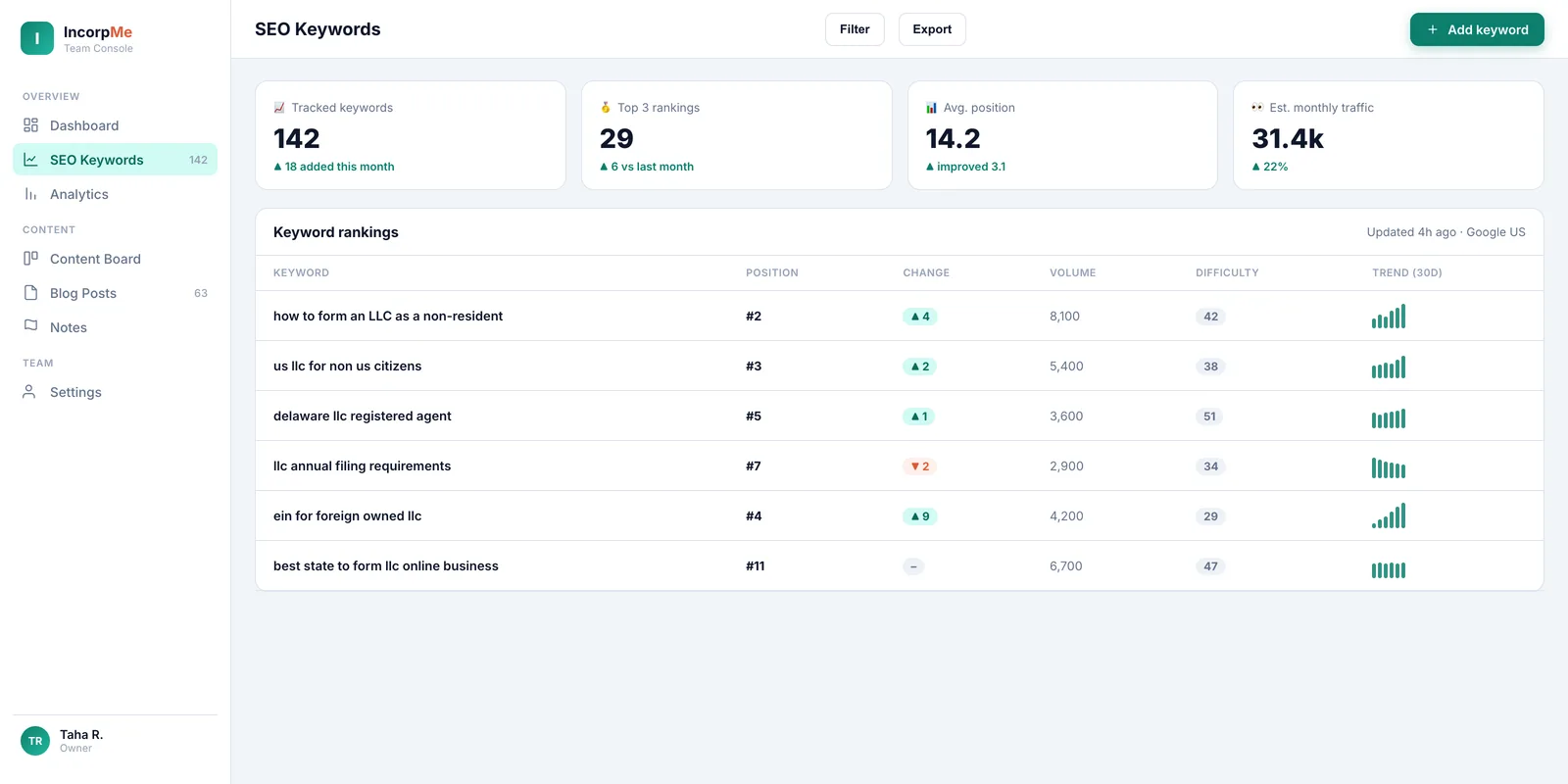
IncorpMe.ai helps non-US residents form US LLCs, a market known for opaque pricing, so trust and content are the whole game. The team needed to run SEO and editorial operations (keyword tracking, a content pipeline, publishing) without ever touching the live marketing site's codebase or sharing its database, and without paying for and wiring up a heavyweight CMS.
What we were solving
Editorial staff needed to publish to a statically-generated Next.js marketing site that has no CMS and no admin UI of its own.
Giving content people access to the site's repo or a shared production database was off the table for security and stability.
The team still needed real tooling around the work: keyword tracking, an idea-to-published pipeline, and shared notes.
How we built it
Built the console as its own Coolify resource with its own dedicated Postgres, so it owns all team and editorial data and the marketing site's database is never touched.
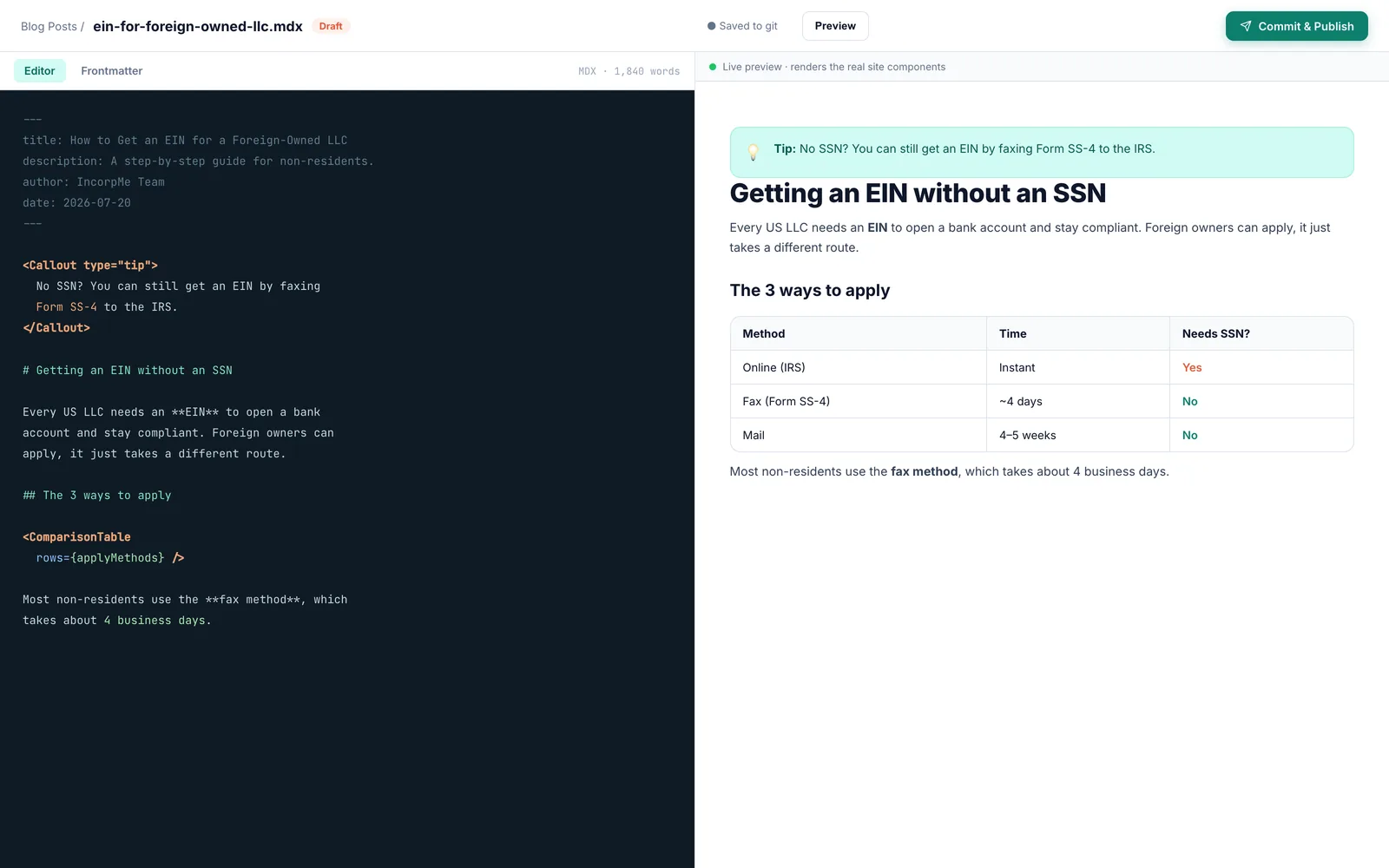
Made publishing a git operation: the console commits MDX files straight to the site's repo via the GitHub Contents API, then fires a deploy webhook so Coolify rebuilds the static site, no manual deploy step.
Gave the editor a live split-pane preview that renders the site's actual blog components (callouts, stat rows, comparison tables), so what writers see is what ships.
Kept roles deliberately simple: the first signup becomes owner, everyone else defaults to editor, with no CRM or leads module by design.
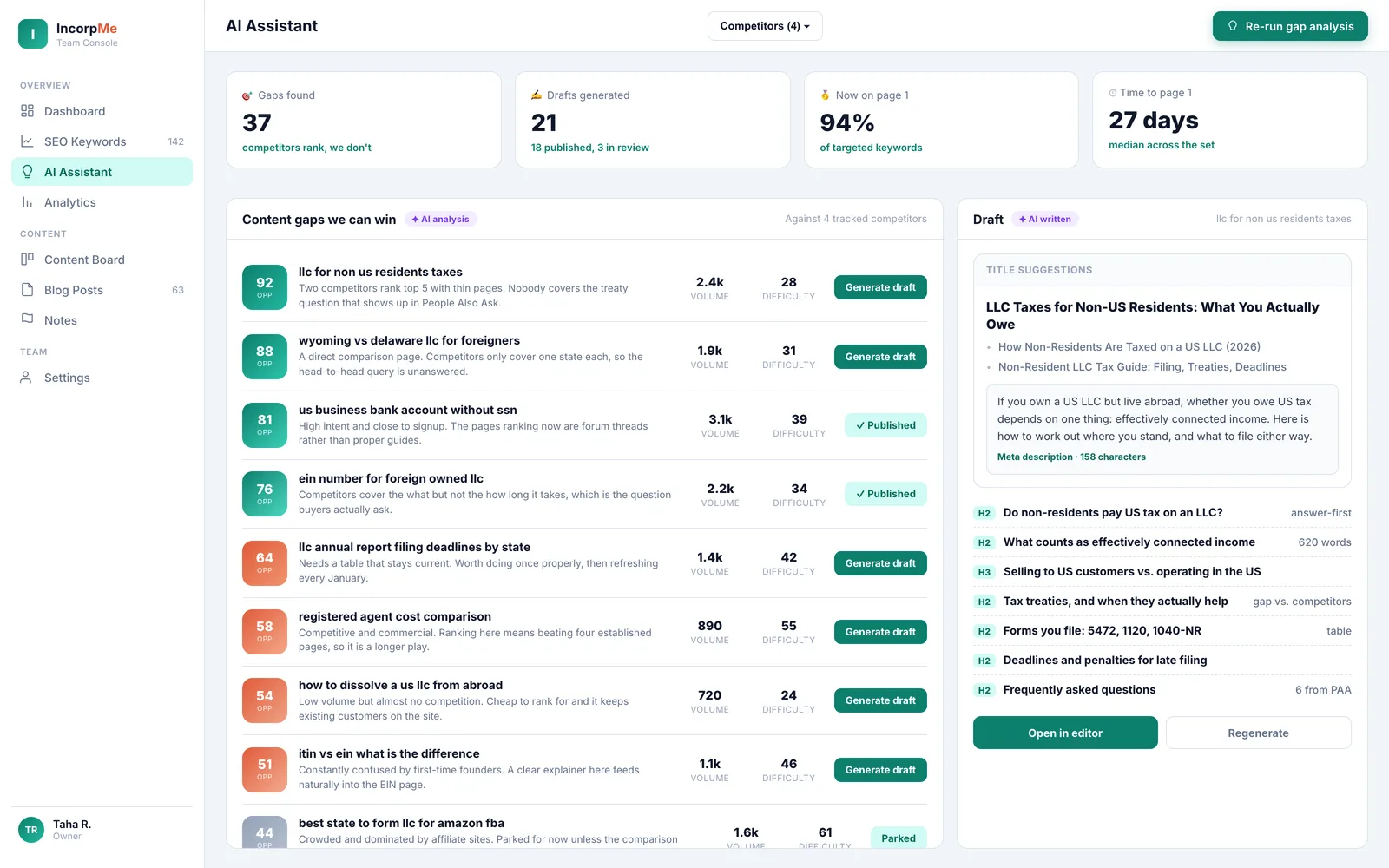
Built an AI layer into the workflow: keyword ideas and gap analysis for the tracker, brief-to-draft and headline/meta suggestions in the MDX editor, and ranking insights that suggest the next post to write.
Why it holds up
Editors can't touch the live site
Publishing happens through a locked, one-way path, so a mistake in the console can never break the production website or its database.
Publishing is one click
A writer hits publish and the live site rebuilds itself automatically, no developer needs to be in the loop for routine posts.
What you preview is what ships
The editor renders using the site's real components, so there are no surprises between what a writer sees and what goes live.
AI does the first draft, the team does the judgement
The assistant turns a keyword and brief into a draft and suggests what to write next, so writers start from something instead of a blank page.
You write where the gap is
Gap analysis shows what competitors rank for and what they have missed, so effort goes into pages that can realistically win.
Key features
- AI SEO assistant: keyword ideas, gap analysis and ranking insights
- AI-assisted MDX editor: brief-to-draft, headline and meta suggestions
- AI pipeline help: suggests the next post to write from keyword gaps
- SEO keyword tracker for the content team
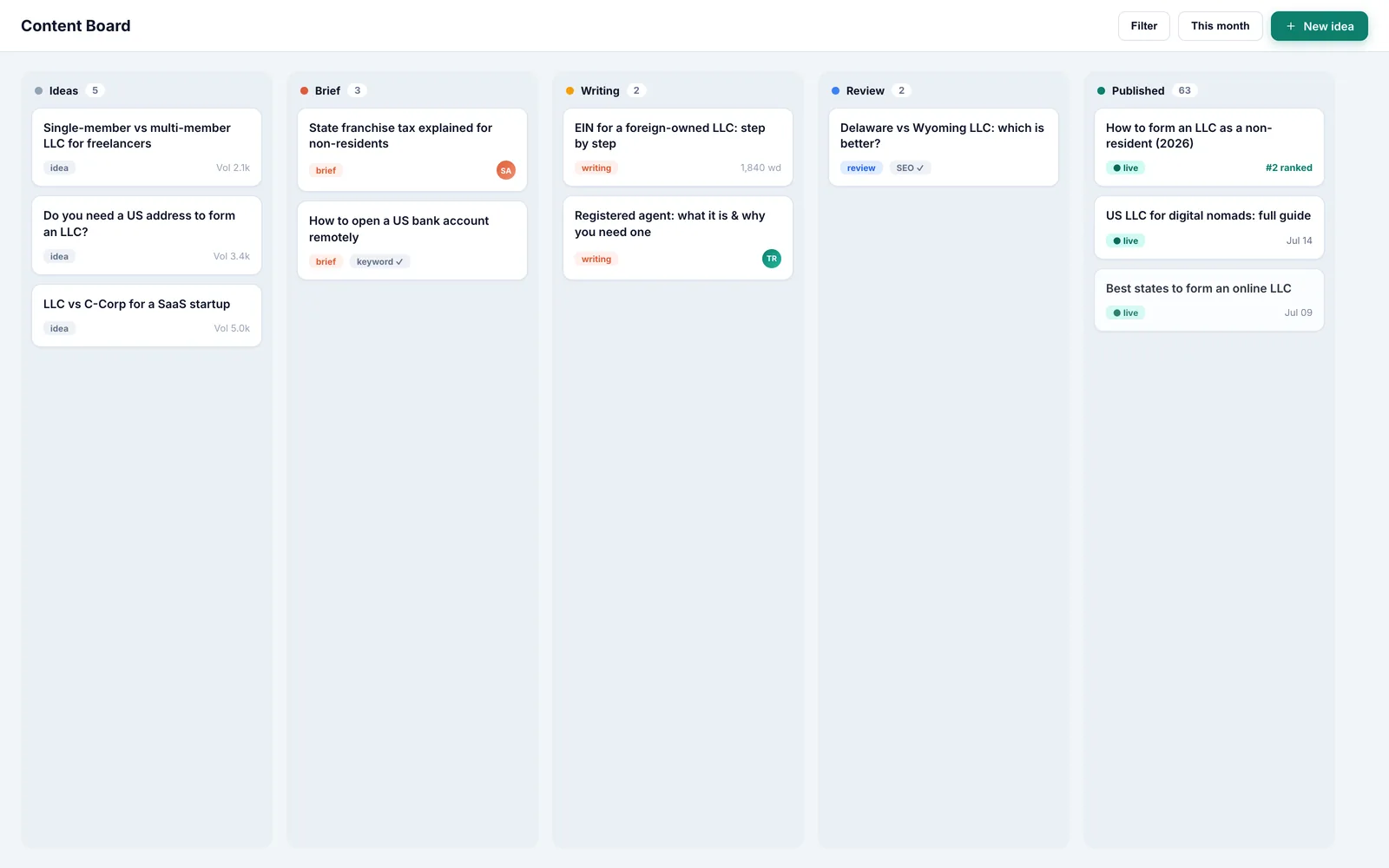
- Idea → brief → writing → review → published content Kanban
- Git-based MDX blog editor with a live, component-accurate preview
- One-click publish that commits to GitHub and rebuilds the site
- Shared team notes visible to everyone, editable by author or admin
- Role-based access: owner, admin, editor (first signup becomes owner)
- Hard separation: no shared database with the live marketing site
The outcome
The speed came from knowing where to aim. Instead of guessing at topics, the AI layer mapped what competitors ranked for and, more usefully, what they had ignored. Writing into those gaps got IncorpMe onto page one for almost every relevant keyword in under a month, and that traffic now brings in leads on a regular basis rather than in spikes. IncorpMe's own marketing stats (LLCs formed, review counts) are deliberately left out here, since those are their numbers to verify, not ours.